Welcome To

Religious Education

Our Vision for Religious Education

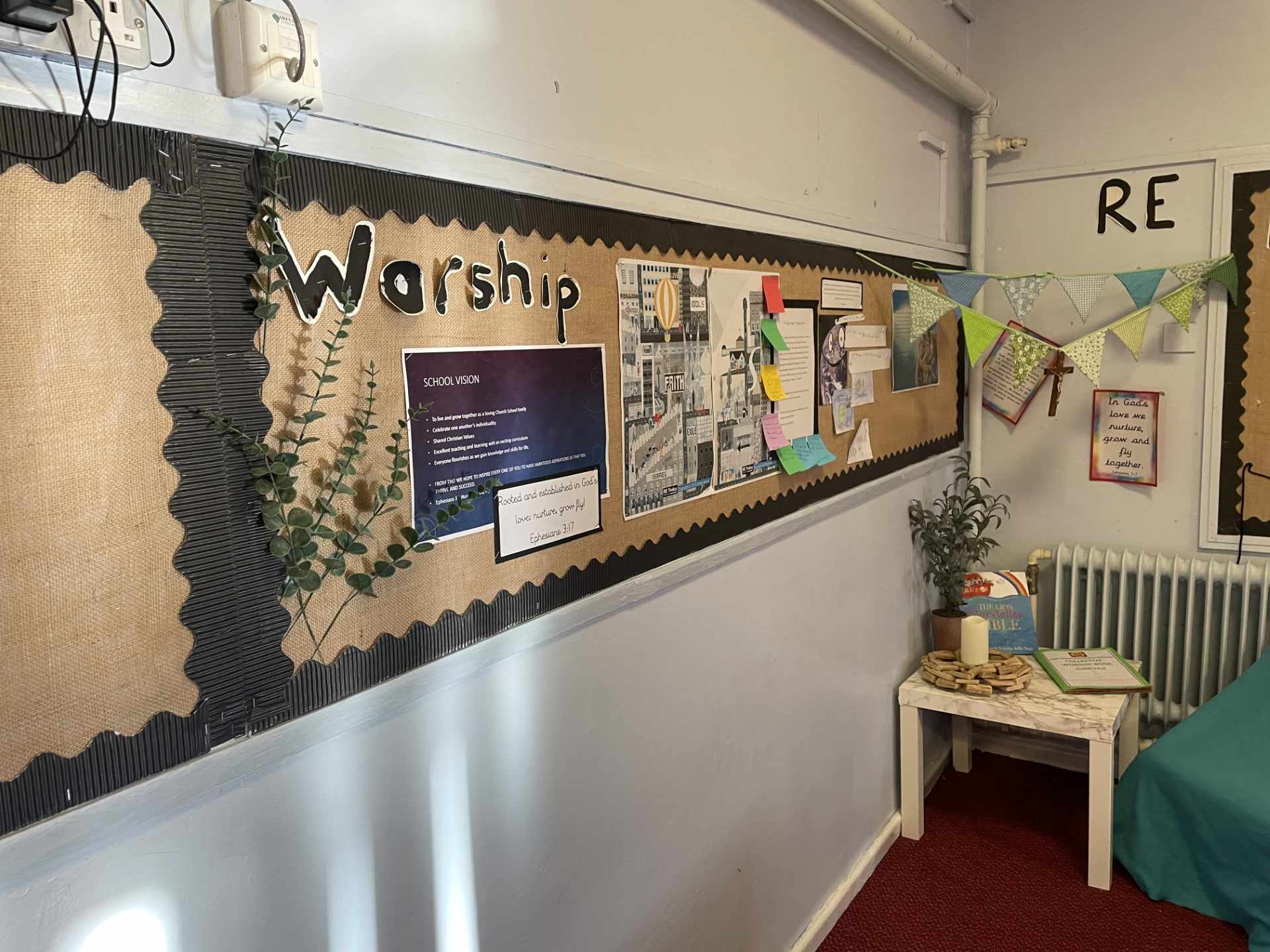
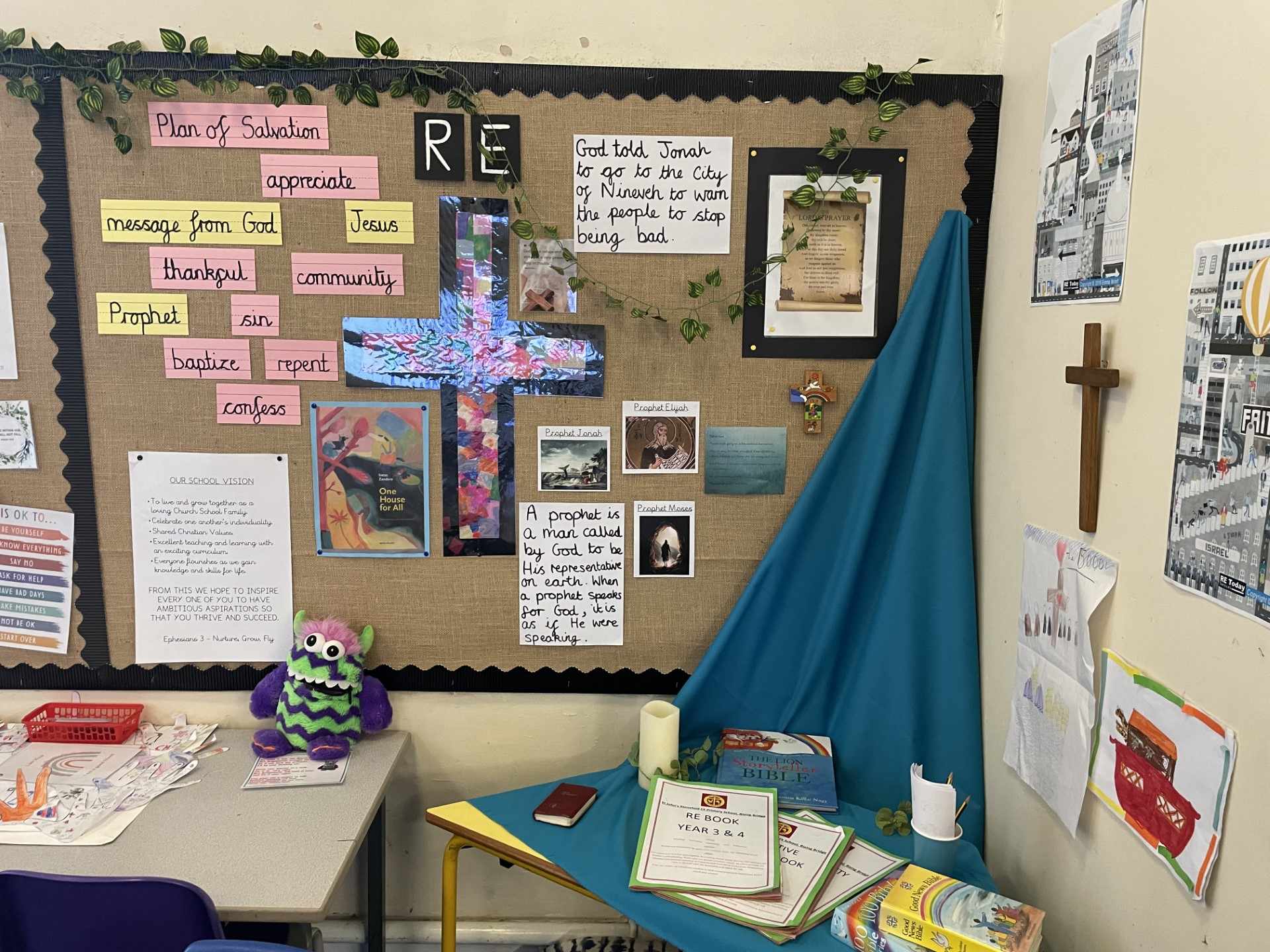
At St John’s Stonefold CE Primary School, Religious Education lies at the heart of our vision: “Rooted and Established in God’s Love: Nurture, Grow, Fly” (Ephesians 3:17). As a close-knit church family, we nurture every child’s spiritual development, enabling them to explore, reflect and grow in faith, understanding and respect. Through Religious Education, pupils develop their own beliefs, values and attitudes whilst exploring shared human experiences and the significance of religion in the contemporary world.

Following the Blackburn Diocese Questful RE syllabus, our curriculum is centred on Christianity whilst also developing understanding of other faiths and worldviews. Guided by our Christian EAGLE values of Empathy, Aspiration, Generosity, Love and Endurance, children learn to appreciate different beliefs, engage respectfully with others and develop as thoughtful, reflective and compassionate individuals.


Intent

Our Religious Education curriculum is designed to:

  • Develop children’s understanding of Christianity and its significance within the world today.
  • Enable pupils to explore important questions about belief, meaning and purpose.
  • Encourage reflection on personal beliefs, values and experiences.
  • Develop knowledge and understanding of other faiths and worldviews.
  • Promote respect, tolerance and understanding within an increasingly diverse society.
  • Foster spiritual, moral, social and cultural development.
  • Encourage children to engage thoughtfully with difficult questions and different viewpoints.
  • Prepare pupils to become compassionate, informed and responsible members of society.

Implementation

Religious Education is taught using the Blackburn Diocese Questful RE Syllabus alongside Understanding Christianity. Christianity forms the core of the curriculum whilst pupils also learn about a range of other world faiths and worldviews appropriate to their age and stage of development.

Children learn through:

  • Biblical stories and scripture.
  • Investigation of beliefs and practices.
  • Discussion and reflection.
  • Big questions and enquiry-based learning.
  • Visits to places of worship.
  • Encounters with faith leaders and visitors.
  • Creative learning opportunities.
  • Exploration of world religions and cultures.

Learning encourages pupils to think deeply, ask questions, make connections and consider how faith impacts people’s lives and communities.


Progression Through School

EYFS

Children begin by exploring what makes them unique, special people, places and celebrations. They encounter key Christian stories and begin developing an understanding of faith, belonging and community.

Key Stage 1

Pupils learn about key Christian beliefs and celebrations including Harvest, Christmas, Easter, Baptism, the Church and Jesus’ life. They also begin learning about other faiths and how different communities celebrate, worship and express belief.

Lower Key Stage 2

Children deepen their understanding of Christianity through studies of faith, prayer, worship, forgiveness, leaders and values. They increasingly compare and contrast beliefs from different religious traditions and consider how faith influences actions and choices.

Upper Key Stage 2

Pupils engage with increasingly complex theological questions about God, faith, identity, hope, justice and purpose. They develop the skills to discuss and evaluate different viewpoints whilst showing respect and understanding for diverse beliefs.


Christianity and World Faiths

As a Church of England school, Christianity is at the heart of Religious Education and forms the majority of curriculum time. Alongside this, pupils develop knowledge and understanding of other faiths and worldviews, including Islam, Judaism, Hinduism, Sikhism and Buddhism. This helps children understand both their local community and the diverse world in which they live.

The curriculum enables children to:

  • Learn about different faith traditions.
  • Identify similarities and differences between beliefs.
  • Respect people of all faiths and none.
  • Explore questions of meaning, purpose and identity.
  • Reflect on their own beliefs and values.

Spiritual Development and Reflection

Religious Education plays a significant role in supporting pupils’ spiritual, moral, social and cultural development. Through reflection, discussion and enquiry, children are encouraged to consider values, beliefs, responsibility and the impact of their choices on others.

Pupils are provided with opportunities to pause, reflect, question and develop their understanding of themselves, others and the world around them.


Parents' Right to Withdraw from Religious Education

Parents have the legal right to withdraw their child from all or part of Religious Education. This right is exercised by parents and no reason needs to be provided. Withdrawal may apply to specific units, activities or the entirety of RE.

Before any withdrawal takes place, we encourage parents to discuss their concerns with the Headteacher so that they fully understand the aims, content and educational purpose of the curriculum. This enables parents to make an informed decision.

Where pupils are withdrawn, the school will continue to supervise them, although alternative RE provision is not automatically provided by the school. Any withdrawal arrangements will be discussed sensitively and individually with families.


Impact

By the time pupils leave St John’s Stonefold, they will:

  • Have a secure understanding of key Christian beliefs and teachings.
  • Demonstrate knowledge of a range of religions and worldviews.
  • Ask thoughtful questions about faith, meaning and purpose.
  • Show respect, tolerance and understanding towards others.
  • Reflect on their own beliefs, values and experiences.
  • Understand the role religion plays in people’s lives and communities.
  • Be equipped to contribute positively to modern Britain and the wider world.

What Makes RE Special at St John's Stonefold?

  • A curriculum rooted in our Christian vision and values.


  • Strong partnership with St John’s Church and the Blackburn Diocese.


  • Use of the highly regarded Questful RE curriculum.


  • Opportunities to encounter and learn from people of different faiths.


  • Deep thinking through big questions and theological enquiry.


  • A welcoming, inclusive environment where every child is valued and respected as uniquely created in the image of God.


Religious Education in Action

Children explore rich enquiry questions such as:

  • How does having faith affect people’s lives?
  • What made Jesus special?
  • Why is light an important symbol in world faiths?
  • Is death an ending or a beginning?
  • Why are holy buildings important to people of faith?
  • Why is the Exodus such a significant event in Jewish and Christian history?
  • What is the nature and character of God?

Related Pages

Meet Our

Leaders

Mrs Gray is the Religious Education leader for St John’s Stonefold. She is supported by Miss Isherwood.

Our overarching aim at St John’s Stonefold, is for our pupils to live life in all its fullness. Offering a well-rounded and balanced curriculum is one way we work towards achieving this and Religious Education provides the perfect platform for children to explore what living a full life might look like for them and the people around them.

Through our Religious Education curriculum we aim:

  • to engage pupils in inquiry into questions arising from the study of religion and belief, so as to promote their personal, spiritual, moral, social and cultural development.
  • to provide learners with knowledge and understanding of Christianity and other principal religious traditions and beliefs represented in Great Britain.
  • to develop their understanding of the ways in which beliefs influence people in their behaviour, practices and outlook.
  • to enable learners to apply the insights of the principal religious traditions to their own search for identity and significance.
  • to facilitate learners’ individual journeys to developing their own beliefs and values and to have a positive attitude to the search for meaning and purpose in life.
  • to encourage learners to develop a positive attitude towards other people who hold religious beliefs different from their own.

Religious Education is typically taught for one hour per week in both Key Stage 1 and Key Stage 2 and has a regular place on the weekly timetable in all of these classes. Further opportunities for Religious Education teaching are implemented through special religious festivals, such as Christmas, Easter, Sukkot, Diwali and Eid, and themed weeks. In EYFS, as well as these further opportunities, children take part in discrete Religious Education lessons as well as those interwoven through the early years curriculum.

At St John’s Stonefold, we follow the Blackburn Diocesan RE revised syllabus (2022) – Questful RE – alongside Understanding Christianity. Lessons are planned and delivered in a variety of ways ensuring that all children can access and participate in lessons. Interactive, practical activities encourage the children to discuss their ideas and extend their understanding of difficult concepts and challenging questions. Learning is recorded both individually and in a class scrapbook, with greater emphasis on scrapbook work in Early Years and Year 1.

Pupils’ progress in RE is based on the expected outcomes outlined in the Agreed Syllabus using the ladder of expectation for teacher assessment. Pupils are assessed on a termly basis. Teachers are mindful that pupils’ personal beliefs and ideas are not subject to formal assessment, but are central to good RE. Progress in RE is reported annually to parents in the end of year report.

At St John’s Stonefold, Religious Education develops pupils’…

  • knowledge and understanding of Christianity, other principal world religions, other religious traditions and world views;
  • ability to respond thoughtfully to ‘BIG’ questions about religions, beliefs and life as a whole;
  • understanding and respect for different religions, beliefs, values and traditions (including ethical life stances), through exploring issues within and between faiths;
  • understanding of the influence of faith and belief on individuals, societies, communities and cultures;
  • skills of enquiry and response through the use of religious vocabulary, questioning and empathy;
  • skills of reflection, expression, application, analysis and evaluation of beliefs, values and practices, and the communication of personal responses to these.

At St John’s Stonefold, Religious Education encourages pupils to…

  • consider challenging questions of the meaning and purpose of life; beliefs about God, the self and the nature of reality, issues of right and wrong and what it means to be human;
  • learn from different religions, beliefs, values and traditions while exploring questions of meaning and their own beliefs;
  • learn about religious and ethical teaching, enabling them to make reasoned and informed responses to religious, moral and social issues;
  • develop their sense of identity and belonging, preparing them for life as citizens in a plural, global society;
  • develop respect for and sensitivity to others, in particular those whose faiths and beliefs are different from their own.

At St John’s Stonefold, Religious Education enhances pupils’…

  • awareness and understanding of religions and beliefs, teachings, practices and forms of expression;
  • ability to reflect on, consider, analyse, interpret and evaluate issues of truth, belief, faith and ethics and to communicate their responses.
  • opportunities for personal reflection and spiritual development.

Explore Our

Gallery